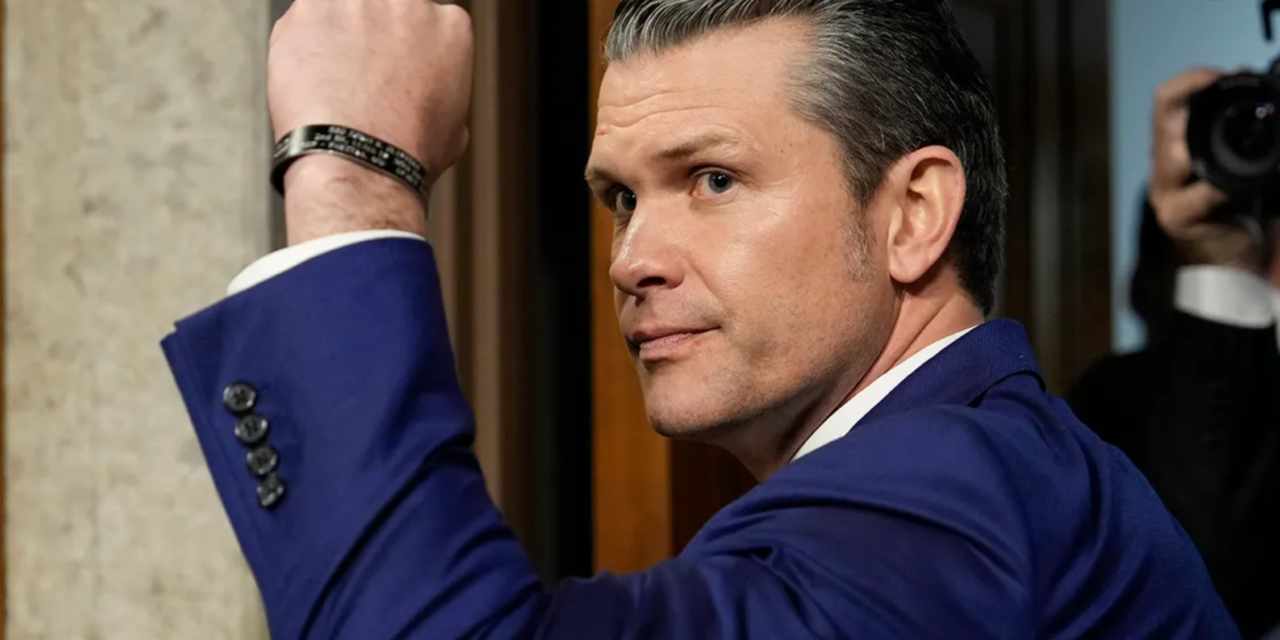
The report also confirms no classified info was shared in the Signal chat shortly before Yemen airstrikes in March.
A Pentagon watchdog report released Tuesday found that Secretary of War Pete Hegseth did not violate any laws or improperly share classified information earlier this year. The March incident, in which Hegseth allegedly shared details of a U.S.-led airstrike in Yemen on the encrypted messaging app Signal roughly two hours before the strike, prompted weeks of scrutiny and triggered multiple investigations. The report concluded that he acted within the scope of his authority but criticized his judgment in handling the messages.
Investigators reviewed Secretary Hegseth’s March 15 messages, which followed a closely tracked timeline contained in an operational email from the Pentagon’s Central Command unit. The report found that, as Secretary of War, Hegseth has the authority to classify or declassify information but is still required to follow federally approved procedures. The watchdog also criticized using an “unofficial channel” to conduct Pentagon business.
“This Inspector General review is a total exoneration of Secretary Hegseth and proves what we knew all along — no classified information was shared. This matter is resolved, and the case is closed,” the department’s chief spokesperson said shortly after the report was released. While President Trump has not commented, media speculation that he was looking to fire Hegseth amounted to nothing, and several White House insiders denied there was any rift between the President and the Secretary of War.
The report states that Hegseth’s actions were not illegal but may have endangered U.S. troops by using non-secured channels. “The Secretary sent information identifying the quantity and strike times of manned U.S. aircraft over hostile territory through an unapproved, unsecure network approximately two to four hours before the execution of those strikes,” investigators wrote. The report also notes that, in a July 25 statement to investigators, Hegseth argued that “there were no details that would endanger our troops or the mission.” The inspector general concluded that Hegseth “risked potential compromise” of the operation, though later acknowledged that no such compromise occurred.
During his interview with the inspector general, Hegseth defended his use of Signal and told investigators that the information he shared on the app was safe to declassify. The report confirmed that the authority to declassify such material falls within his jurisdiction. It also cited Hegseth’s on-the-record statement noting that the timing of the strikes on Houthi targets was not classified in the first place.
The Center for Defense director at the Project on Government Oversight Greg Williams rejected Hegseth’s explanation, as well as certain parts of the inspector general’s report. “The United States military has successfully managed operations for two and a half centuries without the use of an instant messaging application, and why the secretary felt the need to use that application—while sitting in the SCIF and with access at his fingertips to the two more appropriate communication tools—he chose to use this unapproved tool is mysterious to me.”
Williams also argued that even if information was fit to be legally declassified, it does not meet criteria for inclusion in a Signal chat on a personal device. Hegseth himself posted on social media as well, declaring the “case closed” shortly before the entire report was made public.